2023 Winner
2023 Winners
Kraft Heinz
"A.I Ketchup"
Heinz Ketchup is a true icon: it's not just a ketchup, it's THE ketchup. But as a 153 year old brand, it can be challenging to stay top-of-mind and relevant to new, younger generations. So when Heinz Ketchup saw its affinity score drop for the first time in years, it was crucial for the brand to react and get back into the cultural zeitgeist and social conversation.
They needed to get a new, younger audience to engage with Heinz, while proving their iconic status as the #1 ketchup. But the agency knew this audience wouldn’t be receptive to yet another brand talking about themselves, so they had to find a completely unbiased way to show that Heinz = Ketchup. Their iconic status couldn’t just be claimed, it would have to be proven.
In summer 2022, A.I. imagery took over the Internet, with new programs generating images from text. A new frontier in art and design was unfolding.
The agency knew that when you ask people to think of ketchup they think of HEINZ. But, they wanted to find out what happens when you ask something that’s completely unbiased – like artificial intelligence.
An opportunity was presenting itself for them to use cutting-edge technology to prove to a younger audience that Heinz isn’t ketchup – Ketchup is Heinz.
The agency turned to DALL·E 2, the most advanced A.l. image generator at the time – so advanced it wasn’t even available to the general public yet – and asked it what "ketchup" looked like.
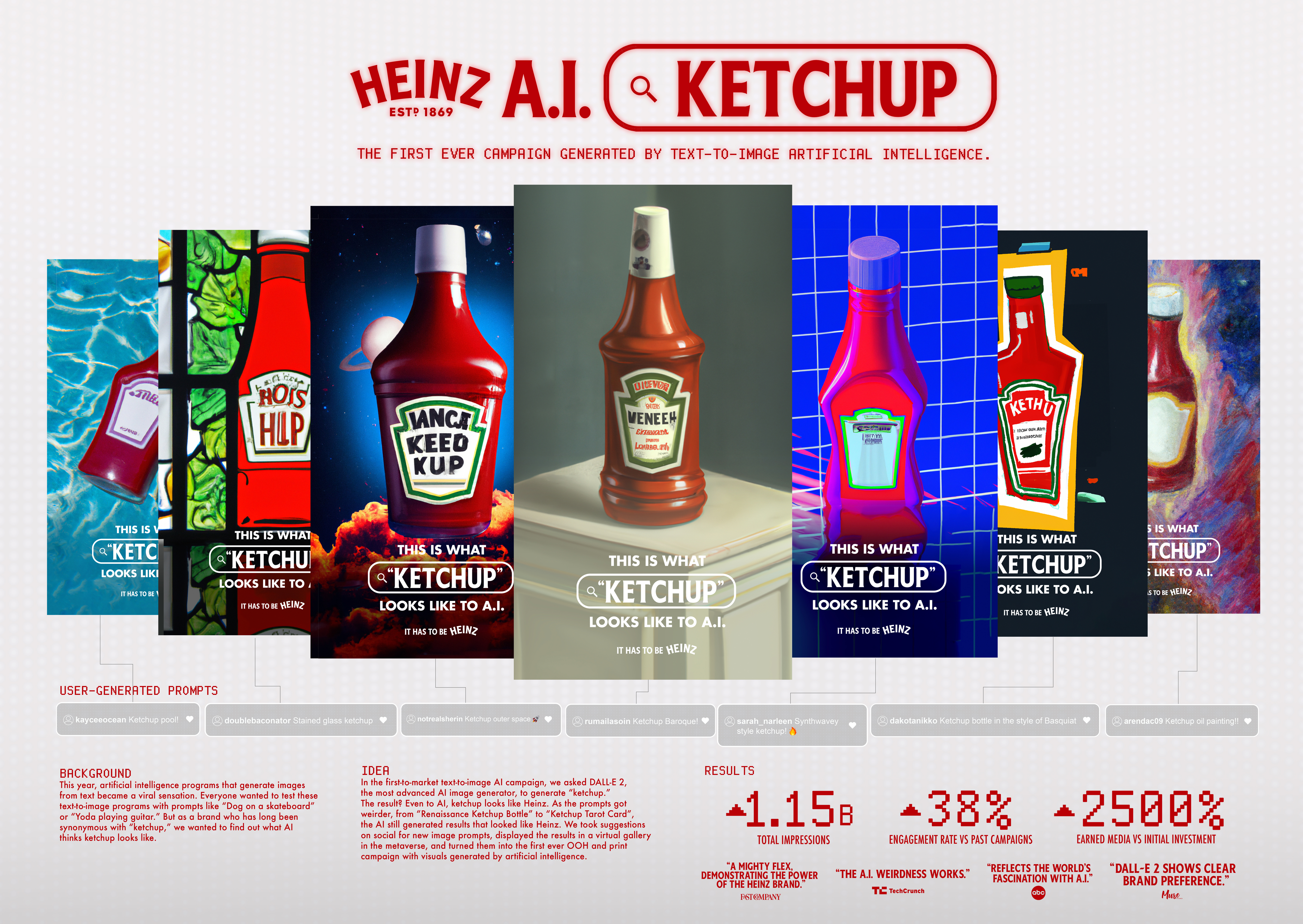
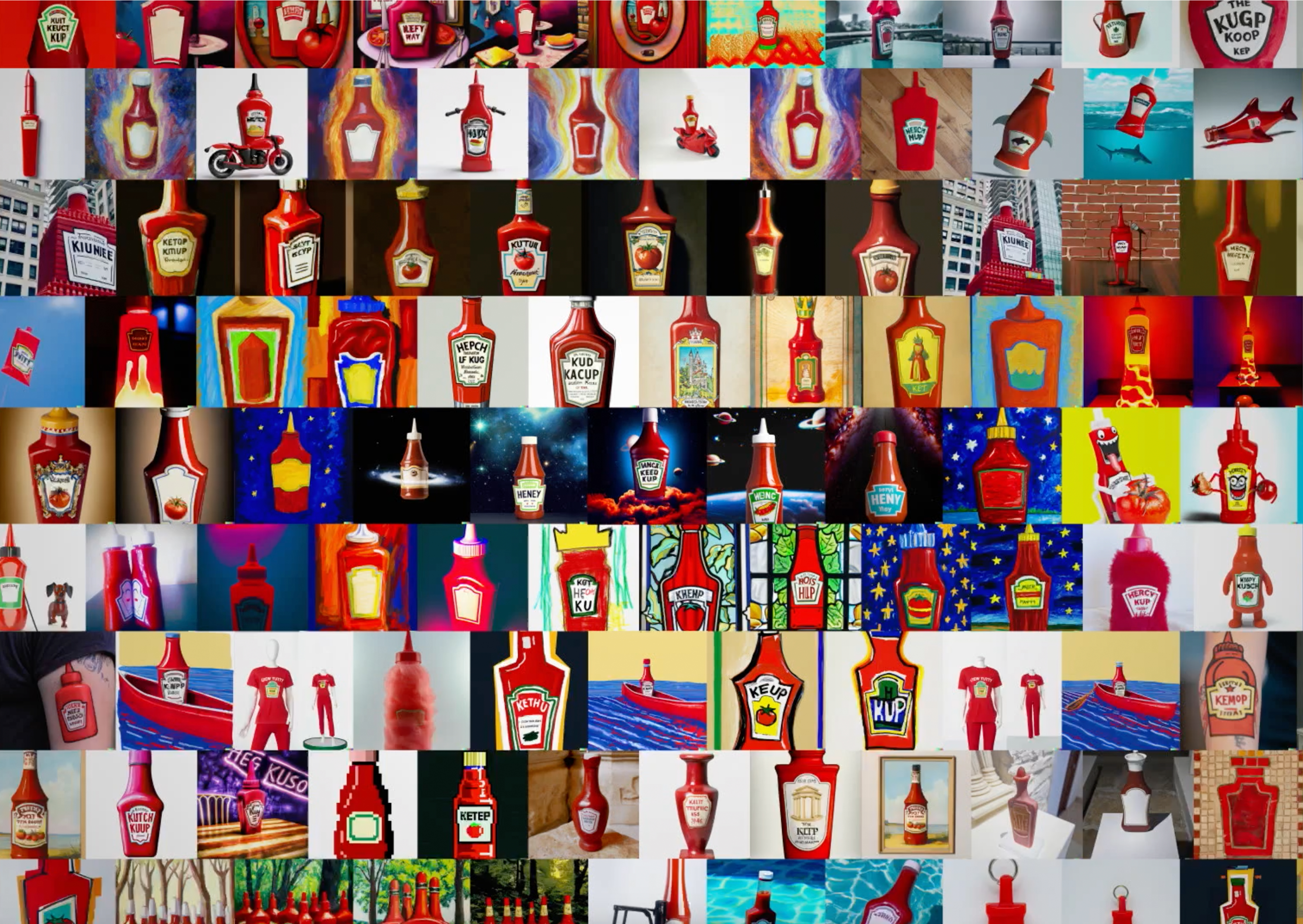
The result? Even to A.l., ketchup looks like Heinz. And as the prompts got weirder, from "Renaissance Ketchup Bottle" to "Ketchup Tarot Card", the A.l. still generated results that looked like Heinz.
On social they put out a call for ketchup mashup image prompts. Suggestions like “Basquiat ketchup” and “Ketchup in space” poured in from around the world – even other brands like Ducati and Sportsnet chimed in with A.I. ketchup image requests. The agency took these suggestions and turned them into the first-ever campaign with visuals generated entirely by A.I. – and co-authored by their fans. From “ketchup cubism” to “psychedelic ketchup” the resulting visuals were astonishingly weird, wonderful and unlike anything anyone would expect to see from a brand like Heinz.
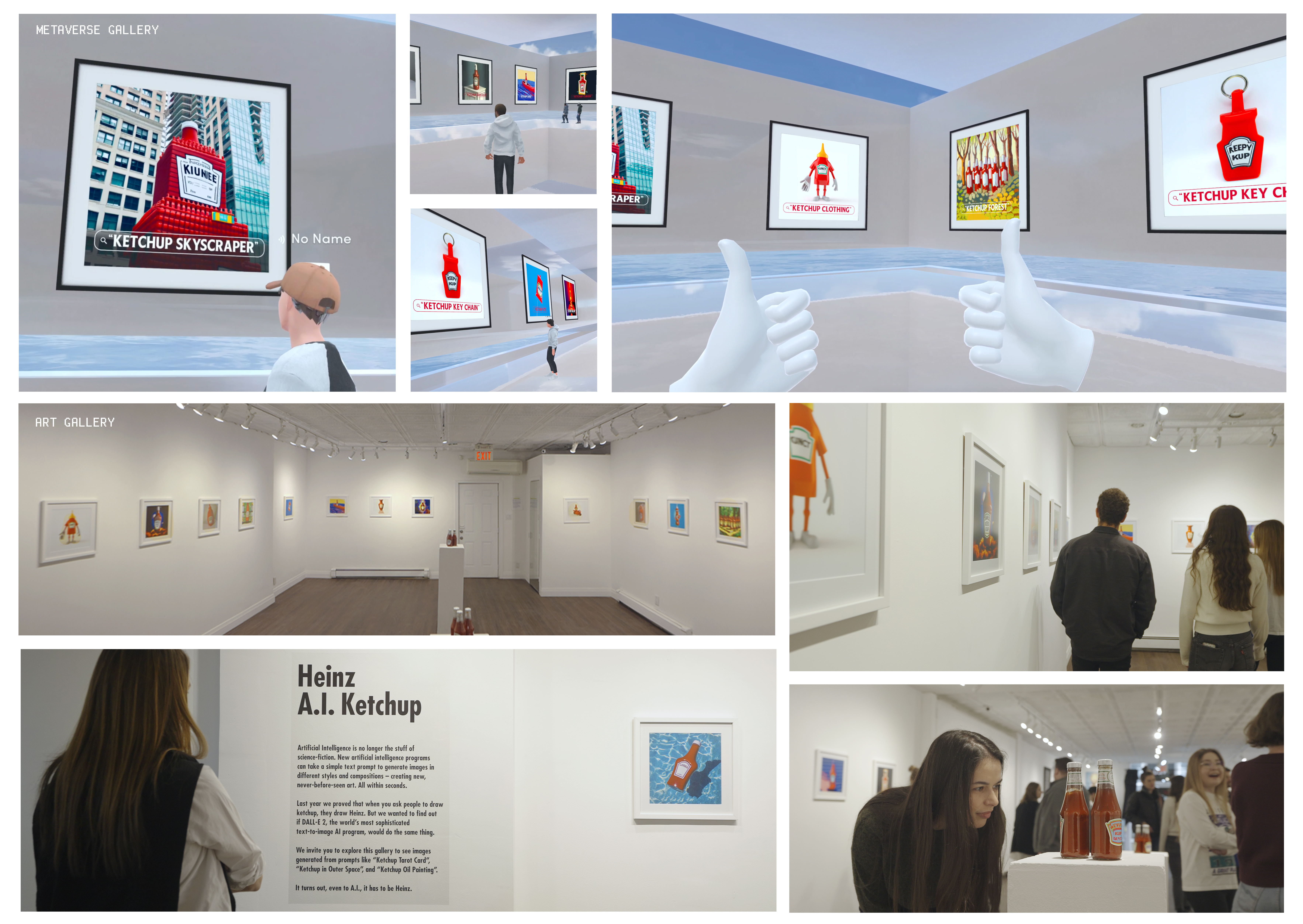
Not only did fans see the images they suggested featured in social and in their long format video, they even created an art gallery in the metaverse where people flocked to view their Heinz A.I. images.
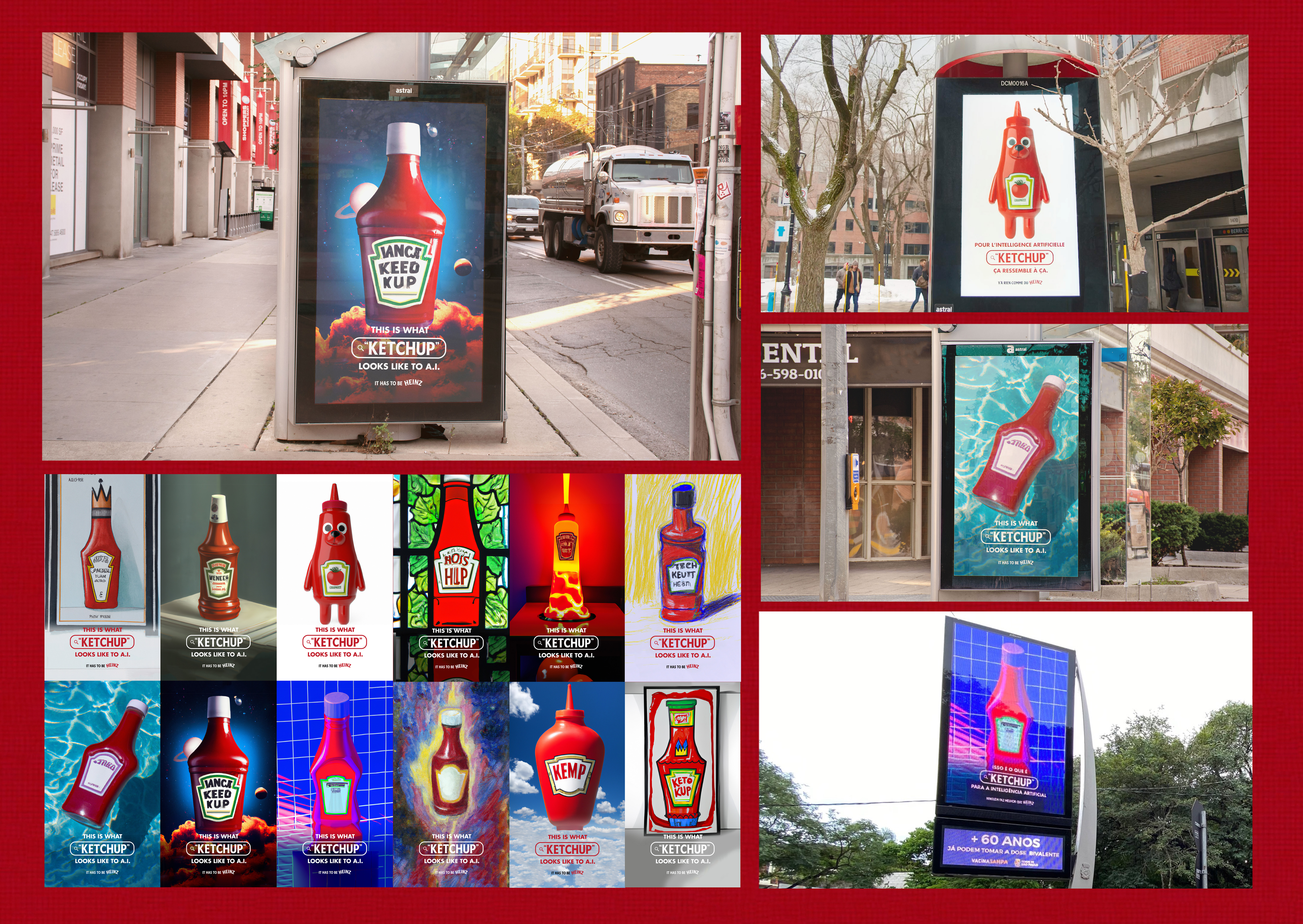
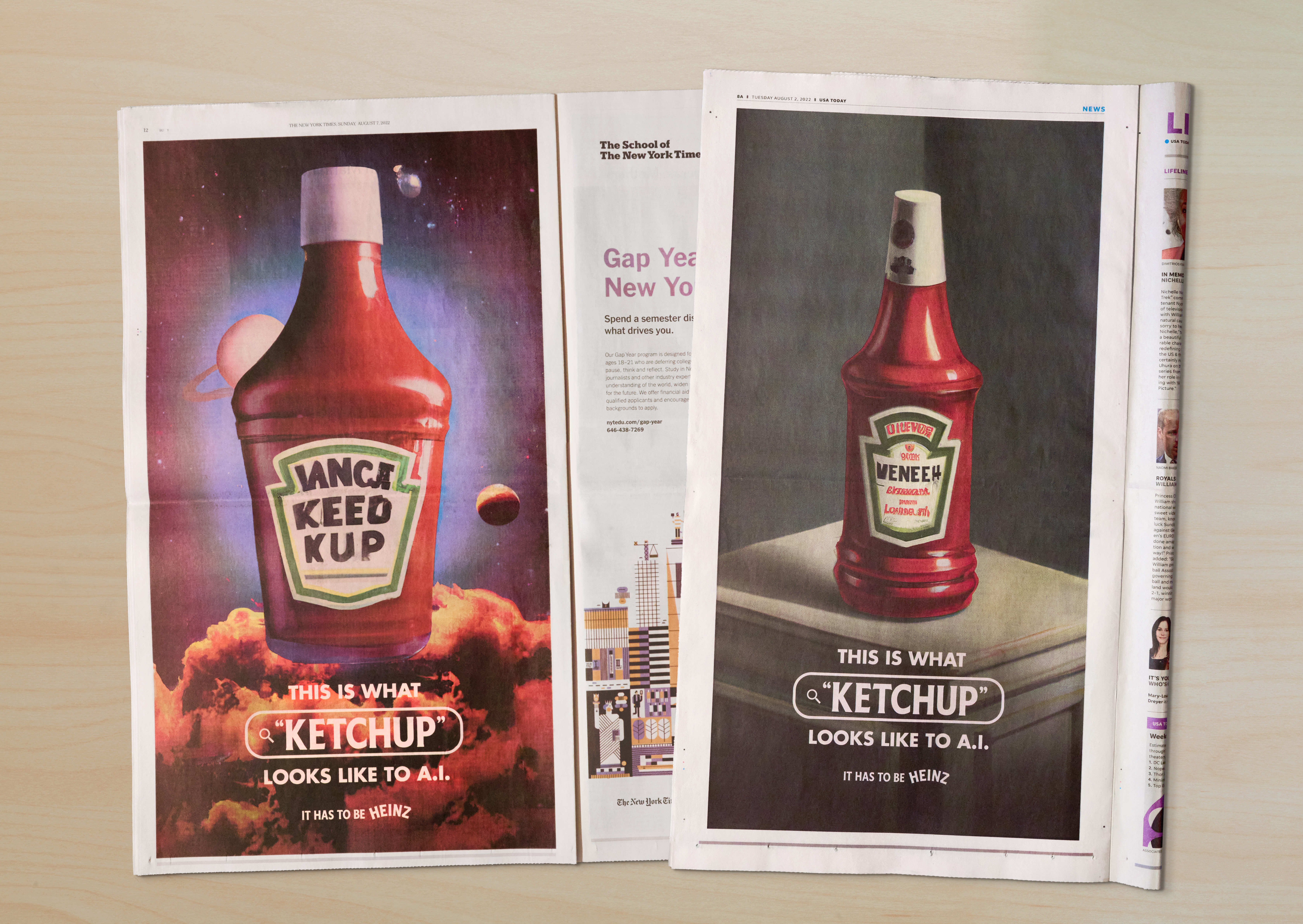
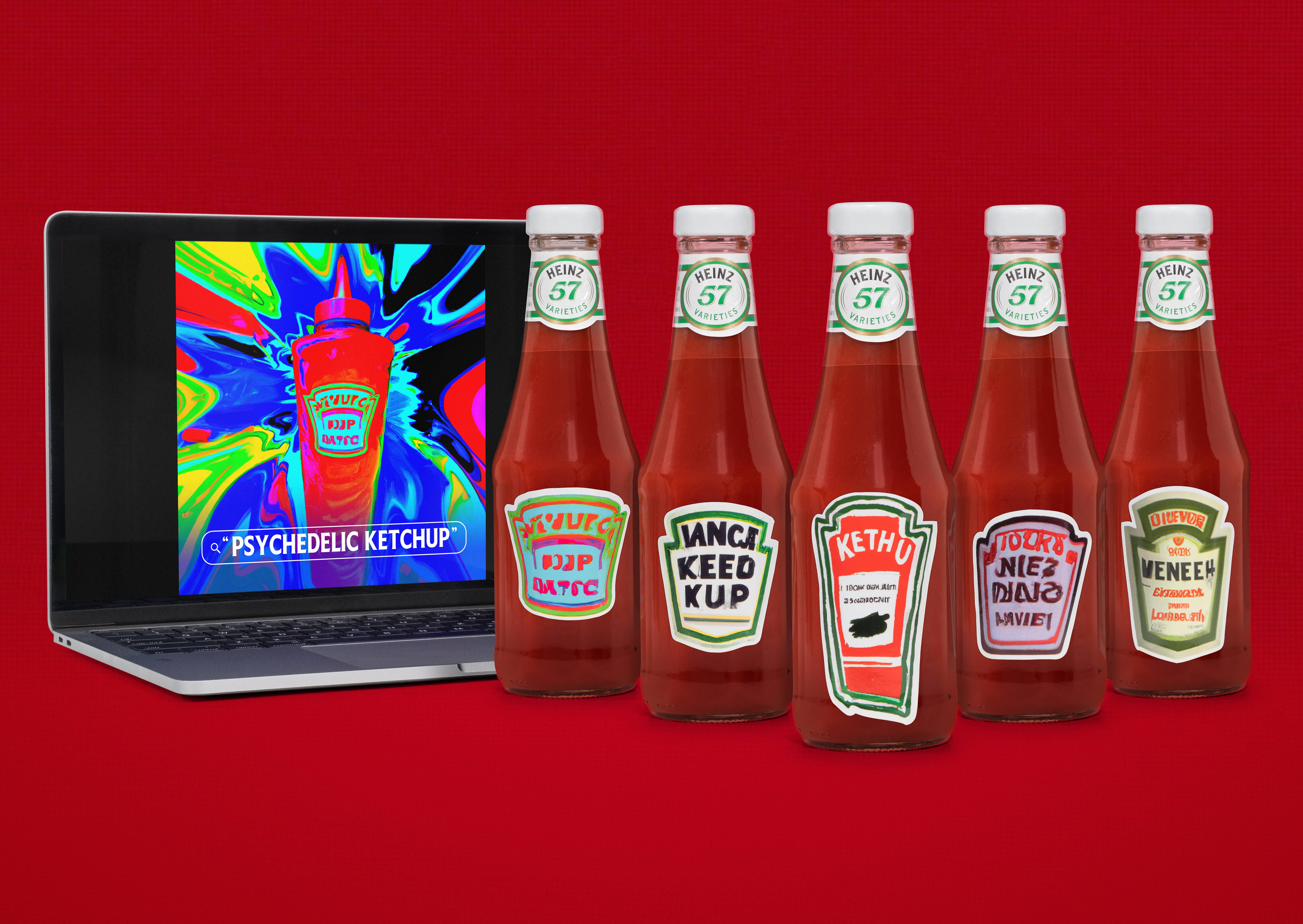
The images were so arresting that they brought them to the physical world as well. The agency featured their one of a kind A.I. Ketchup visuals in full page newspaper placements and OOH. They also produced a run of special edition Heinz bottles replacing the iconic Heinz label with their Heinz A.I. images. They even created the world’s first ketchup-based A.I.-generated art exhibition where people could experience the imagery in-person.
By bringing cutting-edge creative tech to the masses, they were able to demonstrate their iconic status in an entirely new way while reaching a new, younger audience of tech and art fans.
Originally launched in Canada and the US, their campaign quickly went global, generating over 1.15 billion earned impressions (worth over 2500% more than their media investment). They received coverage in leading trade, art, tech, and lifestyle media outlets like Fast Company, Bloomberg, TechCrunch, and Forbes. On social, the agency saw an engagement rate 38% higher than past campaigns, with a significant presence in China, Chile, and Brazil.
In fact, their campaign was so impactful, that in response DALL·E 2 was retrained to reduce brand bias, changing the course of how brands use artificial intelligence.
By capitalizing on the text-to-image A.I. trend before any other brand, their first-to-market campaign proved to a younger generation of tech and culture fans that Heinz is THE ketchup. Even the machines agree.
Artificial intelligence text-to-image generation was at the front end of the A.I. emergence that continues to move at an astonishing speed. So when this opportunity came up they knew we’d have to move fast. Fast enough to be in-market before the A.I. conversation shifted to a new innovation – or, another brand beat them to market with a similar idea. And ironically, it was the A.I. itself that allowed them to move at record speed.
Getting early access to DALL·E 2 in beta form allowed them to build a campaign in real-time in response to image prompts suggested by their fans on social. The agency didn’t need professional illustrators, or photographers, or retouching artists to turn wild ideas into visuals – they just needed a prompt. From there, they were able to run the resulting images, completely unedited, as a global out-of-home campaign that embraced the imperfections of emerging A.I. – and it was co-authored by their fans.
The agency also leveraged the metaverse to build an A.I. Ketchup art gallery that featured a curated selection of their weird and wonderful images, further allowing a 153 year old brand to make in-roads with new, younger audiences.
In the end, their innovation may never be able to be replicated by another brand. In response to their campaign DALL·E 2 was retrained to reduce brand bias, changing the course of how brands use artificial intelligence.
When they built their campaign DALL·E 2 was still in beta and wasn’t available to the general public – yet interest in image-to-text generators had reached viral levels, and DALL·E 2 was the best of the best. They used this to their advantage by crowd-sourcing image prompt suggestions on their social media channels from people who were eager to see what the tech could do. By engaging with their campaign they were able to see the strangest ketchup mashup ideas they could imagine brought to life – and many of these images then featured in a global advertising campaign.
The A.I. Ketchup campaign was born in digital. The image prompt suggestions came from their social channels, and then images themselves were A.I. generated. The campaign kicked off on digital channels and gained momentum there. But their A.I. Ketchup images were so visually compelling and the response was so strong that they quickly saw the opportunity to amplify their approach and use traditional media to expand their reach. They took out full page newspaper insertions, and layered in an OOH media buy too.
The agency also wanted to bring the campaign to life for their fans who contributed to their campaign with ketchup mashup image prompt requests. They created custom Heinz ketchup bottles that featured their image ideas and even hosted an IRL art gallery where A.I. and/or ketchup lovers were able to see the visuals in larger formats up close and personal.
They needed to get a new, younger audience to engage with Heinz, while proving their iconic status as the #1 ketchup. But the agency knew this audience wouldn’t be receptive to yet another brand talking about themselves, so they had to find a completely unbiased way to show that Heinz = Ketchup. Their iconic status couldn’t just be claimed, it would have to be proven.
In summer 2022, A.I. imagery took over the Internet, with new programs generating images from text. A new frontier in art and design was unfolding.
The agency knew that when you ask people to think of ketchup they think of HEINZ. But, they wanted to find out what happens when you ask something that’s completely unbiased – like artificial intelligence.
An opportunity was presenting itself for them to use cutting-edge technology to prove to a younger audience that Heinz isn’t ketchup – Ketchup is Heinz.
The agency turned to DALL·E 2, the most advanced A.l. image generator at the time – so advanced it wasn’t even available to the general public yet – and asked it what "ketchup" looked like.
The result? Even to A.l., ketchup looks like Heinz. And as the prompts got weirder, from "Renaissance Ketchup Bottle" to "Ketchup Tarot Card", the A.l. still generated results that looked like Heinz.
On social they put out a call for ketchup mashup image prompts. Suggestions like “Basquiat ketchup” and “Ketchup in space” poured in from around the world – even other brands like Ducati and Sportsnet chimed in with A.I. ketchup image requests. The agency took these suggestions and turned them into the first-ever campaign with visuals generated entirely by A.I. – and co-authored by their fans. From “ketchup cubism” to “psychedelic ketchup” the resulting visuals were astonishingly weird, wonderful and unlike anything anyone would expect to see from a brand like Heinz.
Not only did fans see the images they suggested featured in social and in their long format video, they even created an art gallery in the metaverse where people flocked to view their Heinz A.I. images.
The images were so arresting that they brought them to the physical world as well. The agency featured their one of a kind A.I. Ketchup visuals in full page newspaper placements and OOH. They also produced a run of special edition Heinz bottles replacing the iconic Heinz label with their Heinz A.I. images. They even created the world’s first ketchup-based A.I.-generated art exhibition where people could experience the imagery in-person.
By bringing cutting-edge creative tech to the masses, they were able to demonstrate their iconic status in an entirely new way while reaching a new, younger audience of tech and art fans.
Originally launched in Canada and the US, their campaign quickly went global, generating over 1.15 billion earned impressions (worth over 2500% more than their media investment). They received coverage in leading trade, art, tech, and lifestyle media outlets like Fast Company, Bloomberg, TechCrunch, and Forbes. On social, the agency saw an engagement rate 38% higher than past campaigns, with a significant presence in China, Chile, and Brazil.
In fact, their campaign was so impactful, that in response DALL·E 2 was retrained to reduce brand bias, changing the course of how brands use artificial intelligence.
By capitalizing on the text-to-image A.I. trend before any other brand, their first-to-market campaign proved to a younger generation of tech and culture fans that Heinz is THE ketchup. Even the machines agree.
Artificial intelligence text-to-image generation was at the front end of the A.I. emergence that continues to move at an astonishing speed. So when this opportunity came up they knew we’d have to move fast. Fast enough to be in-market before the A.I. conversation shifted to a new innovation – or, another brand beat them to market with a similar idea. And ironically, it was the A.I. itself that allowed them to move at record speed.
Getting early access to DALL·E 2 in beta form allowed them to build a campaign in real-time in response to image prompts suggested by their fans on social. The agency didn’t need professional illustrators, or photographers, or retouching artists to turn wild ideas into visuals – they just needed a prompt. From there, they were able to run the resulting images, completely unedited, as a global out-of-home campaign that embraced the imperfections of emerging A.I. – and it was co-authored by their fans.
The agency also leveraged the metaverse to build an A.I. Ketchup art gallery that featured a curated selection of their weird and wonderful images, further allowing a 153 year old brand to make in-roads with new, younger audiences.
In the end, their innovation may never be able to be replicated by another brand. In response to their campaign DALL·E 2 was retrained to reduce brand bias, changing the course of how brands use artificial intelligence.
When they built their campaign DALL·E 2 was still in beta and wasn’t available to the general public – yet interest in image-to-text generators had reached viral levels, and DALL·E 2 was the best of the best. They used this to their advantage by crowd-sourcing image prompt suggestions on their social media channels from people who were eager to see what the tech could do. By engaging with their campaign they were able to see the strangest ketchup mashup ideas they could imagine brought to life – and many of these images then featured in a global advertising campaign.
The A.I. Ketchup campaign was born in digital. The image prompt suggestions came from their social channels, and then images themselves were A.I. generated. The campaign kicked off on digital channels and gained momentum there. But their A.I. Ketchup images were so visually compelling and the response was so strong that they quickly saw the opportunity to amplify their approach and use traditional media to expand their reach. They took out full page newspaper insertions, and layered in an OOH media buy too.
The agency also wanted to bring the campaign to life for their fans who contributed to their campaign with ketchup mashup image prompt requests. They created custom Heinz ketchup bottles that featured their image ideas and even hosted an IRL art gallery where A.I. and/or ketchup lovers were able to see the visuals in larger formats up close and personal.